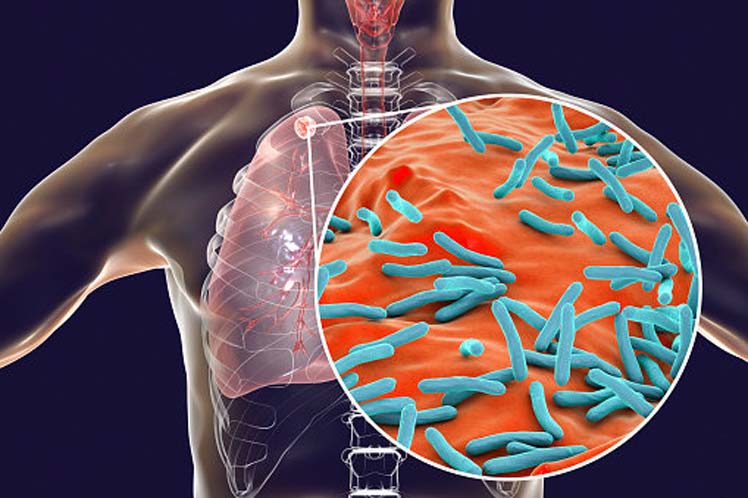
What is Tuberculosis?
Tuberculosis is an infectious disease that globally kills the most people. It is caused by mycobacterium tuberculosis, which is a unique rod that is neither gram positive nor gram negative. TB has the ability to affect any part of the body, but usually attacks the lungs. It also has a long incubation period, a low ID-50, and can often times be latent in individuals. These are several factors that make tuberculosis very dangerous, because infected individuals can unknowingly spread it very easily, or can have it for years without knowing it. There is a vaccination for TB, however, it is typically not used in the United State, it is more often given to younger children who live in countries where TB is more common. This vaccination also doesn’t always provide entire protection against TB. Recently, when I was preparing to volunteer at UNC Hospitals, I had a TB skin test done, however, at the time I didn’t fully understand how it worked. The TB skin and blood test simply tests if you have been infected with TB or not. This test doesn’t tell you if the individual has latent or active-TB. Thus, as soon as someone takes the TB test and the results are positive, they are often placed on antibiotics and may need further testing to determine if they have active-TB. I find my lack of knowledge around Tuberculosis interesting, due to its severity and global impact.
Why should we be concerned about Tuberculosis?
One of the many factors that contributes to the severity of this infectious disease is it’s ability to become drug-resistant. In recent years there has been an increase in the number of individuals who are infected with tuberculosis that is resistant to many, if not all of the drugs that are used to treat tuberculosis. While in some places there is a low prevalence of multi-drug resistant tuberculosis, of around 4-6%. However, in other areas such as Ukraine the percentage of individuals who are infected with multi-drug resistant tuberculosis is as high as 25%. Individuals suffering from this must undergo an extended treatment and are often faced with less favorable outcomes than those with drug-susceptible tuberculosis. With growing multi-drug resistance, I think it is important that individuals adhere to any directions from healthcare workers about how to take antibiotics, and to also avoid taking antibiotics when unnecessary.
Where does Tuberculosis pose the most danger?
Tuberculosis has often been an infectious disease associated with areas of poverty, due to living and working conditions that are often characterized by poor ventilation and overcrowding. These provide some optimal conditions for Tuberculosis to spread. There is currently a movement by the UN to globally end the tuberculosis epidemic by 2030. A recent study looked at China’s challenges and tactics to end the tuberculosis epidemic. Several challenges present in the healthcare system include lack of funding and workforce to control tuberculosis, lack of cooperation across anti-tuberculosis health facilities, difficulties keeping up with new TB diagnostic tools and lack of consistency among health insurance policies and TB control strategies. This study essentially concluded that without a movement in China to organize and make uniform strategies, it is unlikely that they will be able to make the 2030 goal. During the current COVID-19 climate I find this particularly interesting, because it shows how the lack of resources, tools and organization and damper a given health care system.

 Dallis' Blog