
What are Regulatory T-cells in the Immune System?
Regulatory T cells’ are one of may cells in the immune system, however, they play a crucial part in controlling excessive activation, and maintaining homeostasis of the immune system. Thus, when there are problems in the body that cause these T cells to stop doing they’re job, the results are unregulated immune responses and a lack of homeostasis, which characterizes many diseases that there are no cures for. This can lead to the development of dangerous autoimmune diseases or can even cause one’s body to reject a transplant that they have received. When functioning properly, these regulatory T cells have many mechanisms that enable them to suppress different unwarranted immune responses. Therefore, it is a great tool that is being studied and used to treat against things such as cancer, autoimmunity and transplantation. I find this to be extremely fascinating, because it makes so much sense. If the primary issue in a lot of diseases is the lack of functioning regulation, then we can manipulate our usual regulatory cells of our immune system to target the unregulated processes. While this sounds very simple, being able to tailor these cells to target such specific regions of the body is evidently extremely complicated and time consuming, further complicating the use of regulatory T-cells as a therapeutic agent.

Complications with Regulatory T-cell Manufacturing
There are constant advances and research being conducted about Regulatory T-cells and how they can be manufactured and tailored to target specific areas of the body that are the cause of a given disease. However, there are several issues with the manufacturing of these cells. One problem is the low proliferation rates of Regulatory T-cells caused by the conditions that are being used for the expansion of these cells. Another difficulty is that there has yet to be a development of growth factors, culture media and stimulants for the Regulatory cells that can be accommodated for each unique donor. Additionally, this mass production is extremely labor intensive and expensive. There is constantly work being done to discover the best way to tailor these Regulatory T-cells to act on specific pathways or tissues with artificial receptors such as CAR . Overall, while T cell therapy is being used to target unregulated pathways characteristic of diseases such as cancer, there is still a lot of room for growth in this field. Personally, I believe that in the next 10 years, if costs and specificity is further refined, this could be the leading therapy for many diseases that lack cures or therapy.
CAR-T cell therapy .vs. Cancer
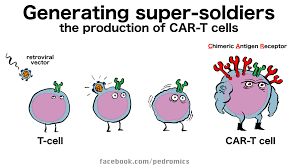
CAR-T (Chimeric Antigen Receptor) is a type of Adoptive Cell Transfer, which is when the patient’s own immune cells are used to treat their cancer. This therapy includes collecting blood from a given patient, and sorting out their T-cells. These T-cells are then genetically engineered to produce receptors on their surface, in this case they’re antigen receptors called CARs (Chimeric Antigen Receptors) and are then are expanded to millions of T-cells with this receptor on its surface. The CARs give the T cell the ability to attach to a specific antigen present on a tumor cell. These CAR-T cells essentially have the directions (with the help of their own co-regulatory molecules as well) to find and trigger a response to this tumor. While this treatment has been shown to work great against cancers in the blood, it still presents some challenges when being used to treat solid tumors. Some of these problems include the CAR-T cells being “off-target” or simply inefficient. Additionally some side effects include cytokine release syndrome which is when cytokines are rapidly released into the blood from immune cells affected by immunotherapy. Symptoms include fever, nausea, trouble breathing and low blood pressure. Despite this, I believe that with continued research and trials, this is a promising treatment that is more specific and damaging to the body than radiation and chemotherapy.

 Dallis' Blog