Be yourself; Everyone else is already taken.
— Oscar Wilde.
This is the first post on my new blog. I’m just getting this new blog going, so stay tuned for more. Subscribe below to get notified when I post new updates.
Be yourself; Everyone else is already taken.
— Oscar Wilde.
This is the first post on my new blog. I’m just getting this new blog going, so stay tuned for more. Subscribe below to get notified when I post new updates.
What is Ebola Virus Disease?
Ebola Virus Disease or EVD is a fatal disease that has seen numerous outbreaks, primarily throughout African continent. EVD is caused by a group of viruses in the Ebolavirus genus including Zaire ebolavirus, Sudan ebolavirus and several others. During the first EVD breakout it was thought to have been spread by a single infected person who traveled between several locations. However, overtime it was discovered that EDV is a zoonotic virus that was likely spread by African Fruit Bats. EDV has been found in animals such as gorillas and chimpanzees, however, when EDV infects these animals they are not afflicted. In humans ebola virus leads to a range of symptoms including individuals who are asymptomatic and have mild infections to more severe cases characterized by hemorrhagic fever, shock and organ dysfunction. Other symptoms include include fever, body aches, muscle and joint pain, weakness and fatigue, diarrhea and vomiting bleeding and bruising. Currently the Democratic Republic of the Congo is experiencing the second largest EDV outbreak, with 2200 deaths and 3400 confirmed cases since this outbreak began in August, 2018. I find this to be very interesting, because given the current COVID-19 pandemic, a lot of other major diseases and epidemics are not discussed as much.
The threat of “Post-Ebola Virus Disease Syndrome”
EDV is dangerous due to its rapid spreading, high mortality rates and the recurring outbreaks present primarily throughout West-Africa. Recently, it appears that even survivors of EDV still have much to be worried about with the emergence of “Post-Ebola Virus Disease Syndrome.” Currently there is still alot of research going into the exact pathogenesis of this reemergence in patients who have recovered from EDV. It is particularly interesting given the fact that there is a very high mortality rate in patients afflicted with this primary infection. This syndrome seems to match several inflammatory and autoimmune conditions such as lupus and arthritis. Another interesting discovery is that in patients that are recovering from ebola, the virus is able to remain in bodily fluids such as semen for extended periods of time. This is dangerous, because even survivors retain the risk of transmission to others. These findings are interesting, and suggest that there is still much research that must be done in regards to “Post-Ebola Virus Disease Syndrome” and the associated dangers of the ability for the virus to remain in ones bodily fluids.
Ebola Vaccination in the DRC
Currently, there are several treatments that are underway and are being tested, however, there is one effective vaccine that is available. A recurring theme with vaccination, is low vaccination rates due to skepticism and a lack of trust. In the current outbreak that the Democratic Republic of the Congo is experiencing, conflict, community distrust and a lack of availability have led to low vaccination rates in the DRC. There was initially an effort to require an individual who has been in close contact with anyone afflicted with Ebola to receive the vaccination. However, after the number of cases continued to grow, it was discovered that 20% or more of individuals who had come into close contact with people who have ebola either refused to be vaccinated or simply did not have access to the vaccine. The DRC is currently attempting new strategies to target small communities and make vaccines more readily available in order to stop the number of new cases from growing. I think that making that education behind the safety of vaccination and making the vaccine more readily available at the small community level will be key factors in reducing the number of new cases.
https://www.fda.gov/media/75713/download
Monoclonal antibodies are antibodies that come from a special hybrid parent cell, have the same variable and constant regions, and can thus recognize the same epitope. These antibodies are made by taking a lab animal and immunizing it to whatever is being studied, the resulting B cells that are made in the animal following immunization are then isolated and fused with myeloma cells. They are then fused together and placed in a medium that contains aminopterin (which myeloma cells cannot grow in the presence of), the B-cells and myeloma cells die, but the fused cells Hybridoma cells proliferate. The Hybridoma cells can then be selected against a specific epitope, and the consequent antibodies are monoclonal antibodies that can all recognize the same epitope.
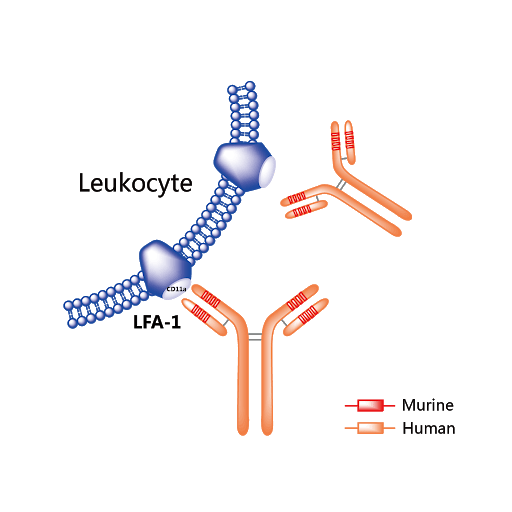
How does Efalizumab act against Psoriasis?
Efalizumab is a drug that is used for people who are afflicted with psoriasis, and is meant to reduce the signs of Psoriasis which primarily includes bumpy red, scaly patches on the skin. These red bumpy, scaly patches are caused by the activation of T cells that are present in the dermis, epidermis and in the circulation that trigger the release of the pro-inflammatory cytokines IL-12, IL-23 and TNF.
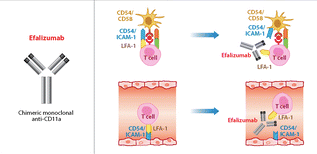
These lymphocytes are activate by binding to leukocyte function antigen-1 (LFA-1) that are expressed on lymphocytes. Efalizumab binds at the CD11a binding site (one of two binding sites on LFA-1 receptor) on the LFA-1 receptor disrupting and blocking the T-cells ability from binding and becoming activated. Without the availability of the CD11a binding site, T-cells are unable to become activated, are unable to travel through the periphery to psoriatic lesions and release pro-inflammatory cytokines and are unable to be reactivated in the skin of someone who has psoriasis.
What are the dangers associated with taking Efalizumab?
While this drug sounds promising, like many drugs it comes with a long list of side-effects. Side-effects of Efalizumab include:
-headache, fever, nausea and vomiting
-An increased risk for developing tumor and an increased risk of bleeding
-An increased risk of developing PML (progressive leukoencephalopathy)
-Risk of infection and reactive latent, chronic infections (because it’s an immunosuppressive agent) including pneumonia, sepsis, meningitis and encephalitis.
-Malignancies
-Immunosupression
-Immune-Mediated Thrombocytopenia
-Immune-Mediated Hemolytic Anemia
-Psoriasis Worsening
-Neurological Events (for example the development of Guillain-Barré Syndrome)
-Onset of Arthritis
Why are there so many dangers associated with taking this drug?
Many of these side-effects are a result of the fact that Efalizumab is an immunosuppressant, reducing ones ability to resist infections. This is because this drug reduces and inhibits the action of T cells which are an important component of our immune response and stops the usual inflammatory pathway that our body has, which impacts our ability to fight of external pathogens that we’re exposed to. Additionally, because it stops the release of several pro-inflammatory cytokines, which are used to fight off infections making individuals more susceptible to diseases and infections such as Tuberculosis, pneumonia and meningitis. This drug impacts aspects of both the innate and adaptive immune system, because it blocks the ability of T cells and their release of pro-inflammatory cytokines which results in the lack of cells of the innate immune system such as neutrophils from being activated or recruited. If I were someone who suffered from psoriasis I would be terrified by this extensive list of possible side-effects, I would definitely have to consider if it was worth it to make myself susceptible to further development of infection and disease.

COVID-19 has charged straight towards the world, resulting in a pandemic that has left us in a scramble to create an effective vaccine. There is work and research going on around the clock to find an effective treatment and to get an effective vaccine that can then be mass-produced to provide to those who need it most. In the mean time, there is a focus on testing to see if an individual has COVID-19 or not, or has had COVID-19. The accuracy is very important in order to stop the spread of COVID-19. If an individual is asymptomatic and receives a test that says they don’t have COVID-19, they can easily spread it to others around them causing further transmission and more chaos. With accurate testing, once an individual knows they have COVID-19, they can quarantine for 14 days and avoid transmission to others. One of the current methods used for detection is the identification of sufficient amount of viral nucleic acids. However, this method can lead to false negative results. Thus, there are also studies being done to determine if it is more accurate to determine the accuracy of testing the timing and presence of antibodies produced against COVID-19, including IgM, IgA and IgG.

What does the presence of certain antibodies mean?
The evaluation of the timing and amount of different antibodies that act against COVID-19 can allow for the evaluation of how long ago an individual was infected with COVID-19 or if they were even infected at all. If someone is tested and it is found that they only have IgM antibody titers, this is an indication that you have been infected with COVID-19, very recently, they were likely been infected for one to five days. This is because, when infected you make IgM first before any class-switched antibodies are produced, IgM can be produced without receiving further activation from Helper-T cells. If they have both IgM and IgG antibody titers, this is an indication that the individual has been infected with COVID-19 for at least five days. This person’s immune system has undergone class-switching, there are now memory cells being produced and more matured antibodies that have a high affinity for the COVID-19 epitope are released, IgG, which is able to get to all over your body.
Why should we care about this?

Another result that could be important to test for is if the patient primarily has an IgG antibody titer. This likely means that they have been infected for more than five days or that this is their second exposure. This is because, following the fifth day of exposure the IgM response wanes and all cells are class switched to IgG. It could also be their second exposure, because, your memory B-cells expressing IgG (which has a higher affinity) get cross-linked and immediately start secreting IgG, rather than only secreting IgM for five days before you can class switch to IgG. Additionally, if a patient is IgG positive, they won’t be able to infect others. If we could determine who was IgG positive we could determine who has COVID-19 and can potentially determine if COVID-19 has undergone a significant amount of antigenic variation/mutated enough to the point where our COVID-19 antibodies can no longer bind to the same viral spike. Then, we wouldn’t see an IgG positive result, because you would essentially have to start all over again with releasing IgM for five days before you can class switch to IgG. This test is important in being able to efficiently determine who has been exposed and has immunity, and who hasn’t been exposed, and has no immunity, meaning they should be even more cautious.
The COVID-19 Pandemic seems to be relentless as we just recently surpassed 1 million cases worldwide. With everyday comes new loads of information about statistics, prevention, vaccine and drug development, it is hard to keep track of it all. However, currently there is no COVID-19 specific medicine or vaccine available for treatment. Rather, medicines for other infections are being used to treat severe cases. Reportedly, there are 70 different drugs being studied worldwide, likely because it is a faster strategy compared to developing an entirely new drug. There has recently been a lot of talk about the effectiveness of Chloroquine which is a drug that has been effective in treating malaria and the autoimmune disease lupus. While studies are being done on this drug it has left individuals with lupus in fear that this drug they heavily rely on may be unavailable to them if found to be effective against COVID-19. I believe this is a valid fear, specifically because they are already in a dangerous position to get COVID-19, due to them being immunocompromised.
A recent study in China reported that chloroquine, a drug that is effective against malaria and lupus was beneficial for patients with COVID-19 versus a comparison group. Hydroxychloroquine, a similar drug that is more widely available in the US has also allegedly been beneficial against COVID-19 symptoms. These drugs have in-vitro affect against several coronaviruses. These drugs are currently being recommended for hospitalized COVID patients. However, these drugs also pose threat as they both have side effects of cardiotoxicity. In a recently conducted study it was found that hydroxychloroquine reduced the detection of SARS-CoV-2 RNA in the upper respiratory tract when being compared to the control group, but there was no found clinical benefit. While this may not be the best option, I think it is somewhat positive that at least there is a drug that can somewhat lessen the effects for hospitalized patients. Another interesting headline that has been circulating in the media is the effect of taking ibuprofen on COVID-19. This is because, ibuprofen may potentially be associated with the over-expression of the enzyme ECA2 that is the gateway enzyme to COVID-19. There is no significant evidence that if an individual takes ibuprofen they are more susceptible to COIVD-19, however, it is recommended to treat symptoms like fever with other drugs like acetaminophen.
Around the world there are fears and high pressures mounting as researchers work tirelessly to try to develop an effective vaccine for COVID-19. The development of this vaccine posses many challenges, because not only does the effectiveness of the vaccine need to be tested against COVID-19, but the affect that it will have on ones body also needs to be examined. This virus contains viral spikes, which is an immunogen. This means that these spikes will trigger an immune response, however, in the development of the vaccine, designing an antigen that elicits an optimal immune response. When designing the vaccine the receptor-binding domain or the full length protein can be used. Thus, researchers must determine which will elicit the best immune response. In my opinion, one thing that is concerning about the time line for this vaccine is, with the urgency to get a vaccine to the public, I wonder about how effective the vaccine will be.
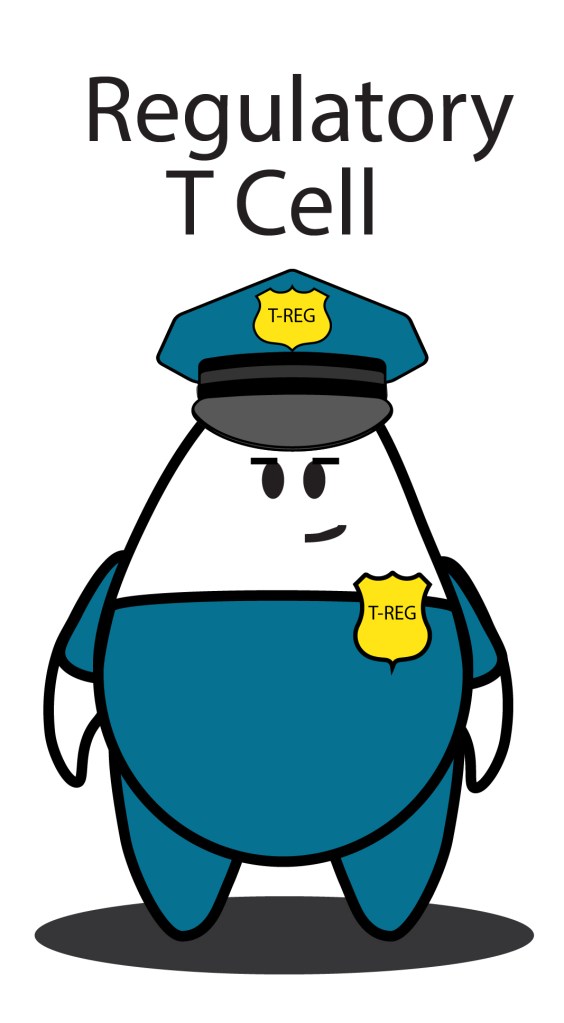
What are Regulatory T-cells in the Immune System?
Regulatory T cells’ are one of may cells in the immune system, however, they play a crucial part in controlling excessive activation, and maintaining homeostasis of the immune system. Thus, when there are problems in the body that cause these T cells to stop doing they’re job, the results are unregulated immune responses and a lack of homeostasis, which characterizes many diseases that there are no cures for. This can lead to the development of dangerous autoimmune diseases or can even cause one’s body to reject a transplant that they have received. When functioning properly, these regulatory T cells have many mechanisms that enable them to suppress different unwarranted immune responses. Therefore, it is a great tool that is being studied and used to treat against things such as cancer, autoimmunity and transplantation. I find this to be extremely fascinating, because it makes so much sense. If the primary issue in a lot of diseases is the lack of functioning regulation, then we can manipulate our usual regulatory cells of our immune system to target the unregulated processes. While this sounds very simple, being able to tailor these cells to target such specific regions of the body is evidently extremely complicated and time consuming, further complicating the use of regulatory T-cells as a therapeutic agent.
Complications with Regulatory T-cell Manufacturing
There are constant advances and research being conducted about Regulatory T-cells and how they can be manufactured and tailored to target specific areas of the body that are the cause of a given disease. However, there are several issues with the manufacturing of these cells. One problem is the low proliferation rates of Regulatory T-cells caused by the conditions that are being used for the expansion of these cells. Another difficulty is that there has yet to be a development of growth factors, culture media and stimulants for the Regulatory cells that can be accommodated for each unique donor. Additionally, this mass production is extremely labor intensive and expensive. There is constantly work being done to discover the best way to tailor these Regulatory T-cells to act on specific pathways or tissues with artificial receptors such as CAR . Overall, while T cell therapy is being used to target unregulated pathways characteristic of diseases such as cancer, there is still a lot of room for growth in this field. Personally, I believe that in the next 10 years, if costs and specificity is further refined, this could be the leading therapy for many diseases that lack cures or therapy.
CAR-T cell therapy .vs. Cancer
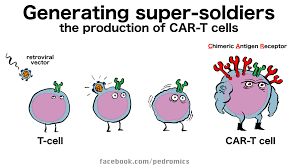
CAR-T (Chimeric Antigen Receptor) is a type of Adoptive Cell Transfer, which is when the patient’s own immune cells are used to treat their cancer. This therapy includes collecting blood from a given patient, and sorting out their T-cells. These T-cells are then genetically engineered to produce receptors on their surface, in this case they’re antigen receptors called CARs (Chimeric Antigen Receptors) and are then are expanded to millions of T-cells with this receptor on its surface. The CARs give the T cell the ability to attach to a specific antigen present on a tumor cell. These CAR-T cells essentially have the directions (with the help of their own co-regulatory molecules as well) to find and trigger a response to this tumor. While this treatment has been shown to work great against cancers in the blood, it still presents some challenges when being used to treat solid tumors. Some of these problems include the CAR-T cells being “off-target” or simply inefficient. Additionally some side effects include cytokine release syndrome which is when cytokines are rapidly released into the blood from immune cells affected by immunotherapy. Symptoms include fever, nausea, trouble breathing and low blood pressure. Despite this, I believe that with continued research and trials, this is a promising treatment that is more specific and damaging to the body than radiation and chemotherapy.
What is Tuberculosis?
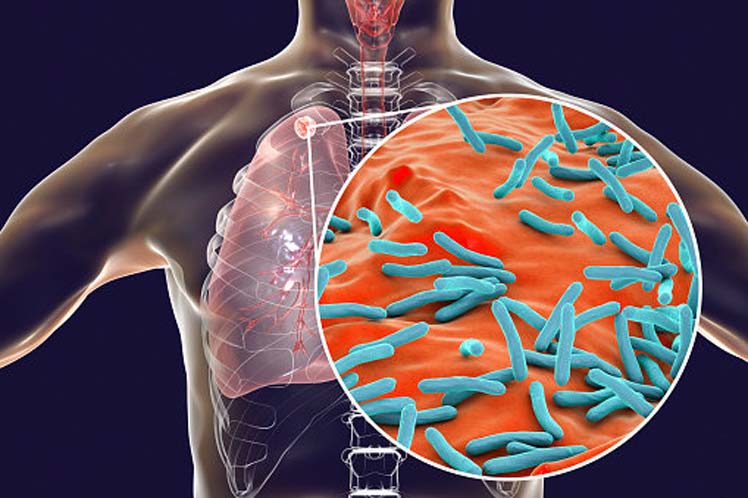
Tuberculosis is an infectious disease that globally kills the most people. It is caused by mycobacterium tuberculosis, which is a unique rod that is neither gram positive nor gram negative. TB has the ability to affect any part of the body, but usually attacks the lungs. It also has a long incubation period, a low ID-50, and can often times be latent in individuals. These are several factors that make tuberculosis very dangerous, because infected individuals can unknowingly spread it very easily, or can have it for years without knowing it. There is a vaccination for TB, however, it is typically not used in the United State, it is more often given to younger children who live in countries where TB is more common. This vaccination also doesn’t always provide entire protection against TB. Recently, when I was preparing to volunteer at UNC Hospitals, I had a TB skin test done, however, at the time I didn’t fully understand how it worked. The TB skin and blood test simply tests if you have been infected with TB or not. This test doesn’t tell you if the individual has latent or active-TB. Thus, as soon as someone takes the TB test and the results are positive, they are often placed on antibiotics and may need further testing to determine if they have active-TB. I find my lack of knowledge around Tuberculosis interesting, due to its severity and global impact.
Why should we be concerned about Tuberculosis?
One of the many factors that contributes to the severity of this infectious disease is it’s ability to become drug-resistant. In recent years there has been an increase in the number of individuals who are infected with tuberculosis that is resistant to many, if not all of the drugs that are used to treat tuberculosis. While in some places there is a low prevalence of multi-drug resistant tuberculosis, of around 4-6%. However, in other areas such as Ukraine the percentage of individuals who are infected with multi-drug resistant tuberculosis is as high as 25%. Individuals suffering from this must undergo an extended treatment and are often faced with less favorable outcomes than those with drug-susceptible tuberculosis. With growing multi-drug resistance, I think it is important that individuals adhere to any directions from healthcare workers about how to take antibiotics, and to also avoid taking antibiotics when unnecessary.
Where does Tuberculosis pose the most danger?
Tuberculosis has often been an infectious disease associated with areas of poverty, due to living and working conditions that are often characterized by poor ventilation and overcrowding. These provide some optimal conditions for Tuberculosis to spread. There is currently a movement by the UN to globally end the tuberculosis epidemic by 2030. A recent study looked at China’s challenges and tactics to end the tuberculosis epidemic. Several challenges present in the healthcare system include lack of funding and workforce to control tuberculosis, lack of cooperation across anti-tuberculosis health facilities, difficulties keeping up with new TB diagnostic tools and lack of consistency among health insurance policies and TB control strategies. This study essentially concluded that without a movement in China to organize and make uniform strategies, it is unlikely that they will be able to make the 2030 goal. During the current COVID-19 climate I find this particularly interesting, because it shows how the lack of resources, tools and organization and damper a given health care system.

Several days ago I returned home to Brooklyn, New York from Chapel Hill. I am truthfully finding the adjustment to be rather challenging. When I was in Chapel Hill last week, there were few people around and I myself was practicing social distancing. However, I found ways to enjoy my time by spending time alone outdoors and enjoying the nice weather from my front yard. However, now that I have returned home to New York, which has the highest number of cases, I have found it to be challenging to not have that freedom and space to spend outdoors, but also at a distance from other people. It is also very scary to be in New York while watching the news reports and posts on social media that constantly have New York in the headlines. While it is challenging, I have also enjoyed getting to spend quality time with my mom that I otherwise would not have.

This quarantine has made me feel many emotions, and one of the strongest ones is gratitude. This time away from Chapel Hill has made me feel so grateful for not only the fact that I have the opportunity to attend UNC, but especially for all the friendships and moments that UNC has given me. As a student it is very easy to get caught up with the constant stress of classes and involvement in clubs. However, this time away has made me realize how important it is to slow down and enjoy each of the little moments that we have. While this is not an ideal situation, I am also grateful for my health, which is also something I take for granted.
In an attempt to stay positive and continue to progress during this period of social distancing, I have made it a goal of mine to improve my cooking skills and to continue to exercise daily despite the lack of a gym. I recently went vegetarian at the start of 2020, and while I do enjoy it, I also find it challenging to keep my meals interesting. Thus, I have started trying to learn how to cook different vegetarian dishes that will give me more of a variety. The lack of a gym has allowed me to become more creative with the type of workouts I do. I have been following different workout videos that I have actually really enjoyed thus far. Despite my longing to be back in Chapel Hill finishing the semester and the scary times that the world is experiencing, I feel as though it is important to be grateful for our health, take this time to continue learning albeit a different way and to practice social distancing to reduce the number of new cases.

What is COVID-19 and what are the symptoms?
COVID-19, also known as the Coronavirus has taken the world by storm as it was recently classified as a pandemic. It is a positively-stranded, enveloped RNA virus. Additionally, it is believed that the initial outbreak began in Wuhan, China several months ago. Coronaviruses are quite diverse, with the greatest diversity seen in bats, which suggests that bats are the reservoirs for a majority of these viruses. It is believed that through mutations and recombination this virus gained the ability to infect humans. Symptoms include but are not exclusive to fever, cough, shortness of breathe, pain and pressure in the chest, headache and fatigue. The mortality rate lies at around 2%, which to some may imply that there is little reason to be worried. However, this is rather concerning, given the length of the incubation period. The incubation period is between 2-14 days, meaning that individuals who are infected may show symptoms 2 days following infection or 14 days following infection. This means that people may unknowingly spread the virus to people in their surroundings, allowing for a large chain of transmission through different populations.
Controlling the spread in China
The initial COVID-19 outbreak began in Wuhan, China around the time of the Chinese Lunar New Year. This is one of the largest annual mass travel events in the world. This served as a great danger with the possibility of amplifying transmission. To avoid this, China quickly imposed tight travel restrictions across the Hubei Province in 16 cities that are home to over 50 million people. These restrictions included cancellations of Lunar New Year gatherings, air, train and buses and vehicles, as well as all flights. Hong Kong also closed schools and Universities following the initial outbreak in order to avoid further transmission. I believe China’s quick action to impose these restrictions were a smart and strategic way to avoid further transmission and avoid the number of growing cases.
Controlling transmission in the US
China was able to quickly impose tight restrictions in an attempt to reduce the growing number of cases. The US has also began to take measures to reduce transmission throughout the population. Several days ago President Trump imposed a travel ban that restricts any non-US citizen from Europe from traveling into the US, and imposed screening requirements for any American returning from Europe into the US. Trump also extended this ban to the UK and Ireland. I believe this travel ban is important in order to reduce the number of COVID-19 cases. Universities and schools across the US have been shut down and are turning to online classes. Additionally, large gatherings of more than 50 people are being canceled and many have been instructed to work from home. Personally, I am anxious to see how this movement to online classes for children of all ages will affect their ability to learn and advance. However, I am hopeful that with time and social distancing the number of people getting infected with COVID-19 will go down.
Why are people hesitant about the HPV vaccine?
Human Papillomavirus is an extremely prevalent sexually transmitted infection that can be prevented with vaccination. The CDC reports that practically all men and women get the virus at some point in their lives. This disease can affect the oral and genital regions of the body and can lead to the development of several types of cancers. Luckily, there is a vaccine that effectively prevents HPV, however, vaccination rates particularly in the US are quite low. This is astounding to me, given the effectiveness and availability of the vaccine. However, one of the many reasons that people are hesitant to get their children vaccinated is because they believe it will encourage sexual behavior. Part of me understands this concern while another large part of me does not. This is because, I believe the focus should be on prevention and the child’s long term health, rather than their sexual behavior. A study looked at the association between HPV vaccination and sexual behavior in college aged men and women. The results showed no link between HPV vaccination and sexual behavior, showing that people should highly consider vaccinating their children.
How knowledgeable are people about HPV?
Public knowledge surrounding HPV is quite low despite the fact that practically all sexually active men and women get the virus at some point in their lives, and that it can lead to several cancers. Personally, before starting this class I had very little knowledge about HPV and its severity. I believe this is because in many cases there is discomfort around the discussion of sexual activity and its consequences. However, I think conversations around prevention strategies are critical to avoid transmission and cancer. A recent study showed that only 33.2% of participants (who were cancer survivors) actually knew that their cancers were HPV-related cancers. Additionally, only 56.8% of participating HPV-related cancer survivors reported that they believed that the HPV vaccine is safe. This shows that measures should be taken by health care providers and by people in general to increase awareness about HPV, its implications, and prevention.
HPV Educational Intervention
One way that the prevalence of HPV can be reduced is through education about it’s severity and how common it is among sexually active individuals. Another interesting thing to consider is at what age is it considered to be appropriate to start these conversations surrounding preventions. One study was conducted in Chengdu, China to learn about the knowledge and attitudes toward HPV the HPV vaccine. In the study one group of these middle school students were provided with information about HPV and the HPV vaccine, while the other group was not provided with this information. A year later they were surveyed and it was found that the group that was educated about HPV was more willing to be vaccinated. This shows that school-based health education can be effective. I think this is important to consider, because with more education at a younger age, it is a possibility that vaccination rates can increase and the prevalence of HPV can be reduced.
What does the HPV Vaccine Protect against?
Human Papilloma virus is the most common sexually transmitted infection. There are many types of HPV strains, some infect ones genital areas, along with the mouth and throat and are transmitted sexually. Others cause warts on the body and are not transmitted sexually. While some HPV infections dissipate with no harmful affects, others can lead to the development of cancers in the vulva, vaginal, penis, mouth and throat areas. In order to combat this potential development of these cancers, there is the HPV vaccine. The HPV vaccine is one of the most effective and practical ways to avoid development of HPV and thus is one of the best preventative mechanisms against cervical cancer, other HPV-associated cancers and chronic genital conditions. HPV is particularly dangerous, because it can be asymptomatic, meaning many people are unaware of the fact that they have it. This allows for HPV to be spread easily, which is why it is crucial that people get vaccinated.
HPV Vaccination Skepticism
While there have been many studies conducted that demonstrate the efficacy of the HPV vaccine, there is still a significant amount of hesitancy when it comes to vaccination. The hesitancy stems from skepticism behind alleged side effects experienced by girls who have received the vaccine along with false information posted on social media and medical websites. The HPV vaccine has been associated with diffuse symptoms in girls including abdominal pain, headache, fatigue, syncope, and tachycardia. However, association does not necessarily mean that there is correlation between the vaccine and the symptoms. A study was conducted from 2000 to 2014 on over a million boys and girls, some vaccinated and others not. There was no relation found between an increase in these symptoms reported at hospitals and the HPV vaccine. This shows the importance of consulting reliable health-care providers when considering receiving a vaccine, that could potentially save ones life and provide prevention of several cancers.
HPV Vaccination Controversy in Japan
While there has been a significant amount of research conducted on the efficacy of the HPV vaccine, there is still significant hesitation behind vaccination. In 2013, the Ministry of Health, Labor and Welfare in Japan suspended the official recommendation for the HPV vaccine. This suspension triggered panic and insecurity about the effects of the vaccine. The suspension was triggered due to the reported “drug-induced suffering” that was allegedly being experienced by various women who had received the vaccine. However, further investigations showed that this recommendation was not supported by sufficient evidence, despite this the recommendation in Japan remained. The purpose behind this recommendation was allegedly to reduce public responsibility, however, I believe that this recommendation is a poor decision. This is because, even if this recommendation is revoked there will likely be wide-spread speculation in regards to the efficacy of the HPV vaccine.
 Dallis' Blog